



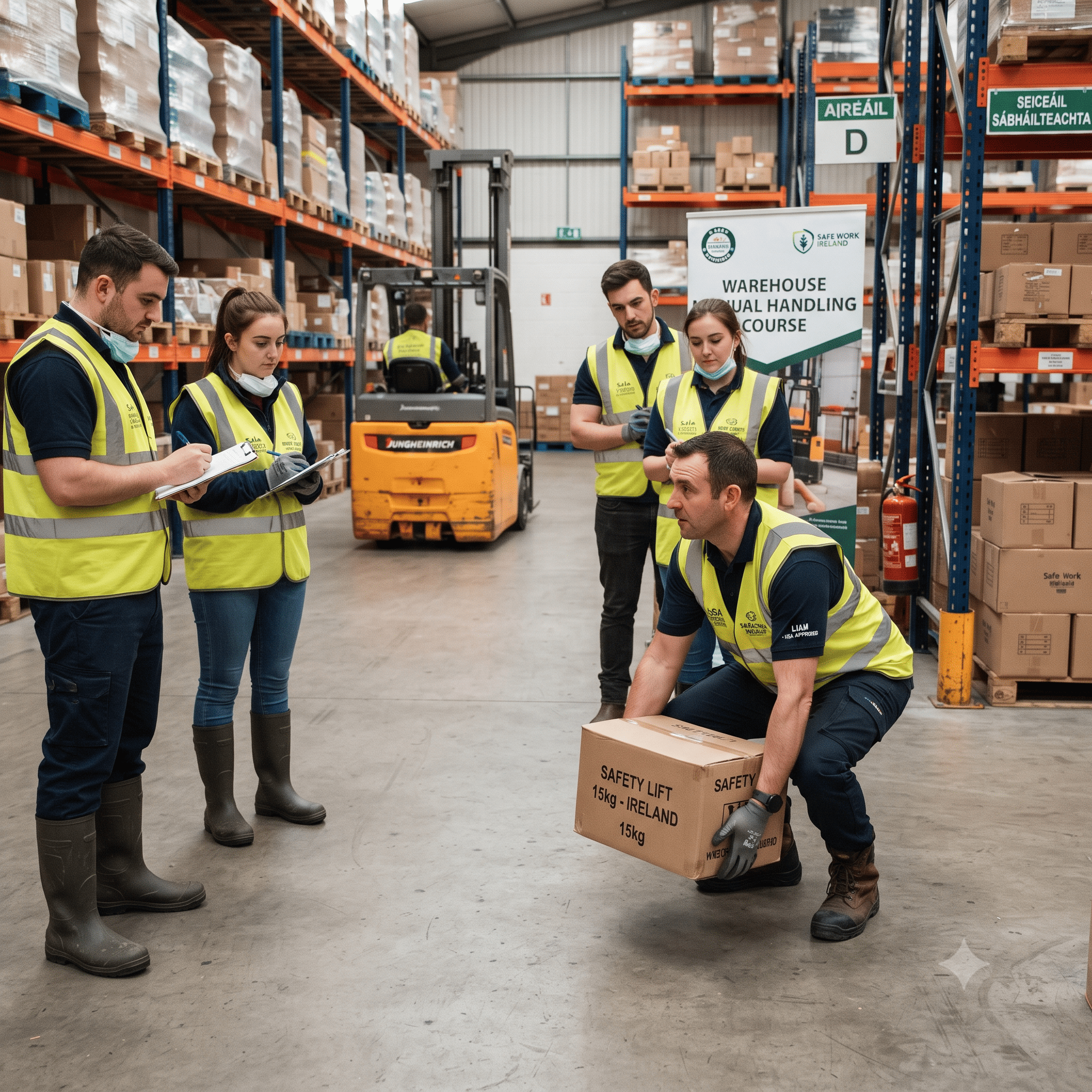
Warehouses are among the busiest working environments in Ireland. Every day, employees receive deliveries, move stock, pick customer orders, load vehicles, unload shipments, and organise inventory. These activities involve constant manual handling, making warehouses one of the industries with the highest risk of musculoskeletal injuries.
Lifting heavy boxes, pushing loaded trolleys, carrying awkward items, and performing repetitive physical tasks can place significant strain on the body when safe techniques are not followed. Even experienced warehouse workers can develop injuries over time if poor manual handling habits become routine.
A professional Manual Handling Training Ireland programme provides warehouse employees with the knowledge and practical skills needed to carry out manual handling tasks safely and efficiently. Through a recognised Manual Handling Course Ireland, workers learn safe lifting techniques, risk assessment, hazard awareness, and the correct use of mechanical equipment. Completing a Manual Handling Certificate Ireland demonstrates that employees understand safe manual handling principles and are prepared to contribute to a safer workplace.
This guide explores the best manual handling practices for warehouse operations and explains how proper training helps reduce workplace injuries while improving efficiency.
Why Manual Handling Is Essential in Warehouses
Warehouse employees spend much of their working day handling goods and materials.
Typical tasks include:
- Loading delivery vehicles
- Unloading incoming shipments
- Picking customer orders
- Stacking pallets
- Carrying cartons
- Moving stock between storage locations
- Organising shelving
- Transporting equipment
- Wrapping pallets for dispatch
Many of these activities involve repetitive lifting and carrying, making safe manual handling an essential workplace skill.
Common Warehouse Injuries
Poor manual handling can lead to a wide range of injuries.
Common examples include:
- Lower back pain
- Muscle strains
- Shoulder injuries
- Neck pain
- Knee injuries
- Wrist strains
- Repetitive strain injuries
- Long-term musculoskeletal disorders
These injuries often develop gradually through repeated poor lifting techniques rather than a single incident.
Understanding Warehouse Hazards
Warehouses contain numerous hazards that increase manual handling risks.
Employees may encounter:
- Narrow aisles
- Slippery floors
- Uneven surfaces
- Poorly stacked goods
- Damaged pallets
- Moving forklifts
- Busy loading bays
- High shelving
- Poor lighting in storage areas
Recognising these hazards before beginning a task helps prevent accidents.
A quality Manual Handling Course Ireland teaches workers how to identify and manage these risks effectively.
Plan Before Every Lift
One of the most effective ways to reduce injuries is to plan each manual handling task before lifting.
Employees should consider:
- How heavy is the load?
- Is it stable?
- Can it be divided into smaller loads?
- Is the route clear?
- Are there obstacles?
- Is help available?
- Can lifting equipment be used?
Taking a few seconds to assess the task significantly reduces injury risk.
Apply Correct Lifting Techniques
Correct lifting methods are the foundation of safe warehouse operations.
Employees should:
- Stand with feet shoulder-width apart.
- Bend at the knees.
- Keep the back in a neutral position.
- Hold the load close to the body.
- Lift smoothly using the legs.
- Avoid sudden movements.
- Maintain balance throughout the lift.
These techniques reduce pressure on the spine while improving control of the load.
Avoid Twisting While Carrying
Warehouse workers often need to place goods on shelves or conveyors.
Twisting while carrying significantly increases the risk of back injuries.
Instead:
- Turn using your feet.
- Keep your shoulders aligned with your hips.
- Maintain the load close to your body.
- Move carefully and steadily.
Simple changes in movement can greatly reduce physical strain.
Keep Loads Close to the Body
Holding loads away from the body places unnecessary stress on muscles and joints.
Employees should always:
- Carry items close to the waist.
- Keep elbows near the body.
- Avoid reaching while lifting.
- Maintain good posture throughout the movement.
This technique improves balance and reduces fatigue.
Know Your Physical Limits
Attempting to lift loads that are too heavy remains one of the leading causes of warehouse injuries.
Employees should never hesitate to:
- Request assistance.
- Split loads where possible.
- Use lifting equipment.
- Report unsafe tasks.
Working safely is always more productive than recovering from an injury.
Make Full Use of Mechanical Aids
Modern warehouses rely on equipment designed to minimise manual handling.
Examples include:
- Pallet trucks
- Forklifts
- Roll cages
- Trolleys
- Conveyor systems
- Lift tables
- Order pickers
A professional Manual Handling Training Ireland programme explains when these aids should be used and how they improve both safety and productivity.
Using mechanical equipment wherever appropriate reduces physical effort and increases efficiency.
Maintain Good Housekeeping
A clean and organised warehouse supports safer manual handling.
Employees should help maintain:
- Clear walkways
- Safe storage areas
- Proper pallet stacking
- Clean loading bays
- Good lighting
- Clearly marked pedestrian routes
Good housekeeping reduces trips, slips, and collisions while carrying loads.
Prevent Repetitive Strain Injuries
Warehouse work often involves repeating the same movements throughout the day.
Without proper technique, repetitive tasks can lead to long-term injuries.
Employees should:
- Rotate duties where possible.
- Take scheduled breaks.
- Stretch when appropriate.
- Alternate lifting tasks.
- Use mechanical aids regularly.
Reducing repetitive strain helps protect long-term health.
Work Safely Around Forklifts
Warehouses frequently combine manual handling with vehicle movement.
Employees should:
- Stay within designated pedestrian routes.
- Maintain eye contact with forklift operators.
- Never walk behind reversing vehicles.
- Keep loads under control.
- Avoid obstructing visibility.
Awareness of vehicle movement is essential for overall warehouse safety.
Team Lifting Best Practices
Certain warehouse items require more than one person.
Examples include:
- Large appliances
- Heavy furniture
- Long building materials
- Oversized cartons
- Industrial equipment
When team lifting:
- Agree on the lifting plan.
- Nominate one person to lead.
- Lift together.
- Walk at the same pace.
- Communicate throughout the task.
Good teamwork improves both safety and efficiency.
Supporting Employee Wellbeing
Manual handling training is about more than avoiding injuries.
Employees who understand safe techniques often experience:
- Less fatigue
- Greater confidence
- Improved comfort
- Better posture
- Increased productivity
Healthy employees contribute to a more efficient warehouse operation.
Supporting Employers
Warehouse employers benefit significantly from investing in Manual Handling Training Ireland.
Advantages include:
- Fewer workplace injuries
- Reduced absenteeism
- Lower compensation costs
- Improved productivity
- Better staff retention
- Stronger workplace morale
- Improved compliance with health and safety responsibilities
Training helps create safer and more reliable warehouse operations.
Online Manual Handling Training for Warehouse Staff
Many businesses choose online learning because it offers flexibility without disrupting operations.
Benefits include:
- Learn from any location.
- Complete training around shifts.
- Access materials on multiple devices.
- Easy induction for new employees.
- Consistent training across multiple warehouse locations.
- Fast certification after successful completion.
Online learning makes it easier to maintain consistent safety standards across the workforce.
The Importance of a Manual Handling Certificate Ireland
After completing a recognised course, participants receive a Manual Handling Certificate Ireland.
The certificate confirms an understanding of:
- Safe lifting techniques
- Manual handling principles
- Risk assessment
- Hazard awareness
- Safe workplace practices
Many warehouse employers require certification before employees undertake manual handling duties.
It also demonstrates professionalism and a commitment to workplace safety.
Building a Strong Safety Culture
Training has the greatest impact when it forms part of a wider workplace safety culture.
Warehouse organisations should encourage employees to:
- Report hazards immediately.
- Follow safe lifting procedures.
- Use mechanical aids whenever appropriate.
- Support colleagues.
- Keep work areas organised.
- Never take unnecessary risks.
When everyone follows the same safety standards, warehouse operations become safer, more efficient, and more productive.
Conclusion
Warehouses depend on efficient manual handling to keep goods moving, but these daily tasks also present significant risks when safe techniques are not followed. Lifting heavy loads, carrying awkward items, and performing repetitive physical work can lead to serious injuries without proper training and planning.
A professional Manual Handling Training Ireland programme equips warehouse employees with the knowledge and practical skills needed to perform manual handling tasks safely and confidently. Through a comprehensive Manual Handling Course Ireland, workers learn correct lifting techniques, hazard awareness, risk assessment, and the effective use of mechanical aids to reduce physical strain and improve workplace safety.
Earning a recognised Manual Handling Certificate Ireland demonstrates a commitment to professional standards and safe working practices. For warehouse businesses across Ireland, investing in manual handling training is not simply about meeting health and safety requirements—it is an investment in healthier employees, fewer workplace injuries, greater operational efficiency, and a stronger culture of safety.