



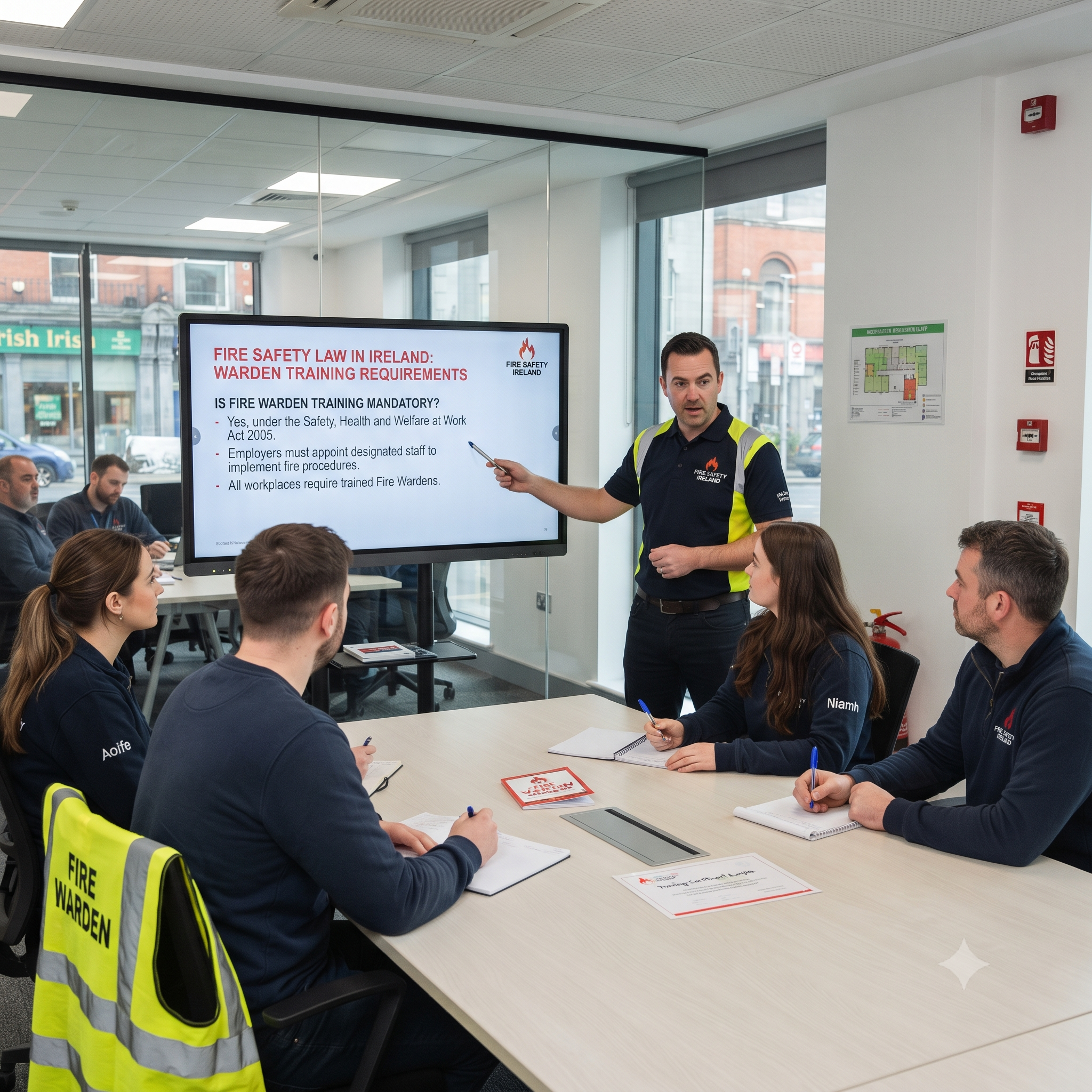
Fire safety is an essential part of every workplace in Ireland. Regardless of the size of your business or the industry you operate in, preparing employees to respond effectively during a fire emergency helps protect lives, property, and business operations. One of the most effective ways to achieve this is by ensuring designated employees complete Fire Warden Training Ireland.
Many employers ask whether they need to appoint fire wardens and who should complete the training. The answer depends on several factors, including the size of the workplace, the level of fire risk, the number of employees, and the layout of the building. However, almost every organisation can benefit from having trained personnel responsible for workplace fire safety.
In this guide, we'll explain who needs Fire Warden Training Ireland, the responsibilities of a fire warden, the industries that benefit most from training, and why online learning has become the preferred option for many businesses across Ireland.
What Is a Fire Warden?
A fire warden, also known as a fire marshal in many organisations, is an employee appointed to help manage workplace fire safety.
Their responsibilities include:
- Promoting fire prevention.
- Identifying fire hazards.
- Supporting emergency procedures.
- Assisting with workplace evacuations.
- Helping employees and visitors reach safety during an emergency.
Fire wardens play an important role before, during, and after emergency situations by encouraging safe working practices and helping workplaces prepare for potential fire incidents.
Why Is Fire Warden Training Important?
A fire can develop rapidly, leaving very little time for employees to react. Without trained personnel to guide an evacuation, confusion and delays can increase the risk of injury.
Completing Fire Warden Training Ireland gives employees the knowledge needed to:
- Recognise fire hazards.
- Reduce workplace risks.
- Support emergency planning.
- Guide colleagues during evacuations.
- Promote fire safety awareness.
Well-trained fire wardens contribute to a safer and more organised workplace every day, not just during emergencies.
Who Should Complete Fire Warden Training?
The people who should complete Fire Warden Training Ireland depend on the workplace and its fire risk assessment. In many businesses, employers appoint specific employees to take on the role of fire warden.
These may include:
- Supervisors
- Team leaders
- Managers
- Health and safety representatives
- Shift leaders
- Experienced employees
- Designated emergency personnel
Employers often choose individuals who are familiar with the workplace, can communicate clearly, and remain calm during emergency situations.
Do Small Businesses Need Fire Wardens?
Yes, many small businesses benefit from appointing a trained fire warden.
Although a small office with only a few employees may not require multiple fire wardens, someone should understand:
- Emergency procedures.
- Fire prevention.
- Evacuation routes.
- Assembly points.
- Basic fire safety responsibilities.
Even in a small workplace, having one trained person helps improve preparedness and confidence during an emergency.
Large Workplaces Need Multiple Fire Wardens
Larger organisations often require several fire wardens to provide adequate coverage.
Factors that influence the number of fire wardens include:
- Number of employees.
- Building size.
- Multiple floors.
- Shift patterns.
- Fire risks.
- Number of visitors.
- Complex building layouts.
Employers should ensure that trained personnel are available whenever the workplace is occupied.
Industries That Benefit from Fire Warden Training
Although every workplace benefits from trained fire wardens, certain industries face greater fire risks or more complex evacuation requirements.
Offices
Modern offices contain electrical equipment, kitchens, printers, paper storage, and meeting areas.
Fire wardens help maintain safe working environments by identifying hazards and supporting evacuation procedures.
Construction
Construction sites often involve:
- Welding
- Cutting
- Temporary electrical systems
- Flammable materials
- Fuel storage
These activities increase fire risks, making trained fire wardens particularly valuable.
Warehouses
Warehouses often contain:
- Large storage areas.
- High shelving.
- Packaging materials.
- Forklift traffic.
- Multiple exits.
Fire wardens help ensure escape routes remain clear and evacuation procedures are understood.
Manufacturing
Factories frequently operate machinery, electrical equipment, and industrial processes that require careful fire safety management.
Trained fire wardens help monitor hazards and promote safe working practices.
Retail
Retail stores welcome employees and customers throughout the day.
Fire wardens help coordinate evacuations while ensuring customers unfamiliar with the building receive clear guidance.
Hospitality
Hotels, restaurants, cafés, and entertainment venues often accommodate large numbers of visitors.
Fire wardens assist staff and guests during emergencies while helping maintain orderly evacuations.
Healthcare
Hospitals, nursing homes, and healthcare facilities often care for people with limited mobility.
Trained fire wardens play an important role in supporting carefully planned emergency procedures.
Education
Schools, colleges, universities, and childcare facilities benefit from staff who understand fire safety responsibilities and can guide students during evacuations.
What Does Fire Warden Training Cover?
A professional Fire Warden Training Ireland course prepares learners for their workplace responsibilities.
Typical topics include:
Fire Safety Fundamentals
Participants learn:
- How fires start.
- The fire triangle.
- Sources of ignition.
- Fire development.
- Common workplace hazards.
Understanding these principles forms the basis of effective fire prevention.
Fire Prevention
Training explains how to identify and reduce risks by:
- Keeping escape routes clear.
- Reporting faulty equipment.
- Storing combustible materials safely.
- Maintaining good housekeeping.
- Recognising hazardous conditions.
Preventing fires remains the primary objective of every fire warden.
Emergency Procedures
Learners also study:
- Fire alarm procedures.
- Evacuation routes.
- Assembly points.
- Communication during emergencies.
- Fire warden responsibilities.
Understanding these procedures allows fire wardens to respond confidently if an incident occurs.
Fire Extinguisher Awareness
The course introduces learners to different extinguisher types, including:
- Water
- Foam
- Carbon dioxide (CO₂)
- Dry powder
- Wet chemical
Participants also learn when it is appropriate to use an extinguisher and why personal safety must always remain the priority.
Why Employers Invest in Fire Warden Training
Businesses across Ireland recognise that investing in Fire Warden Training Ireland provides long-term benefits.
Training helps employers:
- Improve workplace safety.
- Reduce fire risks.
- Promote fire prevention.
- Strengthen emergency preparedness.
- Increase employee confidence.
- Build a positive safety culture.
- Support business continuity.
Employees who understand fire safety contribute to a safer working environment every day.
Benefits of Online Fire Warden Training
Many organisations now choose Online Fire Warden Training Ireland because it combines convenience with comprehensive learning.
Flexible Learning
Employees can study whenever it suits their schedule.
This flexibility is ideal for:
- Busy professionals.
- Shift workers.
- Remote employees.
- Employers training multiple staff members.
Study Anywhere
Online learning allows participants to complete the course from:
- Home.
- Office.
- Remote workplaces.
Only an internet connection is generally required.
Immediate Access
Many online providers offer instant access after enrolment, allowing learners to begin training without waiting for scheduled classroom sessions.
Cost-Effective
Online training reduces travel expenses, minimises time away from work, and allows businesses to train several employees efficiently.
Choosing the Right Fire Warden Course
When selecting a Fire Warden Course Ireland, look for one that includes:
- Comprehensive fire safety content.
- Practical workplace examples.
- Self-paced online learning.
- Interactive assessments.
- Easy-to-use learning platform.
- Certification upon successful completion.
A quality course should prepare learners to apply their knowledge confidently in real workplace situations.
Why Fire Warden Training Benefits Every Workplace
Regardless of the industry, every organisation can benefit from having trained employees who understand workplace fire safety.
Fire wardens help:
- Identify hazards before they become serious.
- Encourage safer working practices.
- Support emergency planning.
- Assist with evacuations.
- Improve workplace confidence.
- Promote a stronger safety culture.
These everyday contributions reduce risk and improve overall workplace preparedness.
Conclusion
So, who needs Fire Warden Training in Ireland? The answer is simple: any workplace that wants to improve fire safety, prepare employees for emergencies, and reduce fire risks should consider appointing trained fire wardens. From small offices to large construction projects, warehouses, healthcare facilities, schools, and hospitality businesses, trained fire wardens play an essential role in protecting people and supporting effective emergency procedures.
Completing Fire Warden Training Ireland gives employees the knowledge and confidence to identify hazards, promote fire prevention, and assist colleagues during emergencies. With flexible online learning, practical course content, and certification upon successful completion, becoming a trained fire warden has never been more convenient. Investing in fire warden training is an investment in workplace safety, employee wellbeing, and long-term business resilience.