



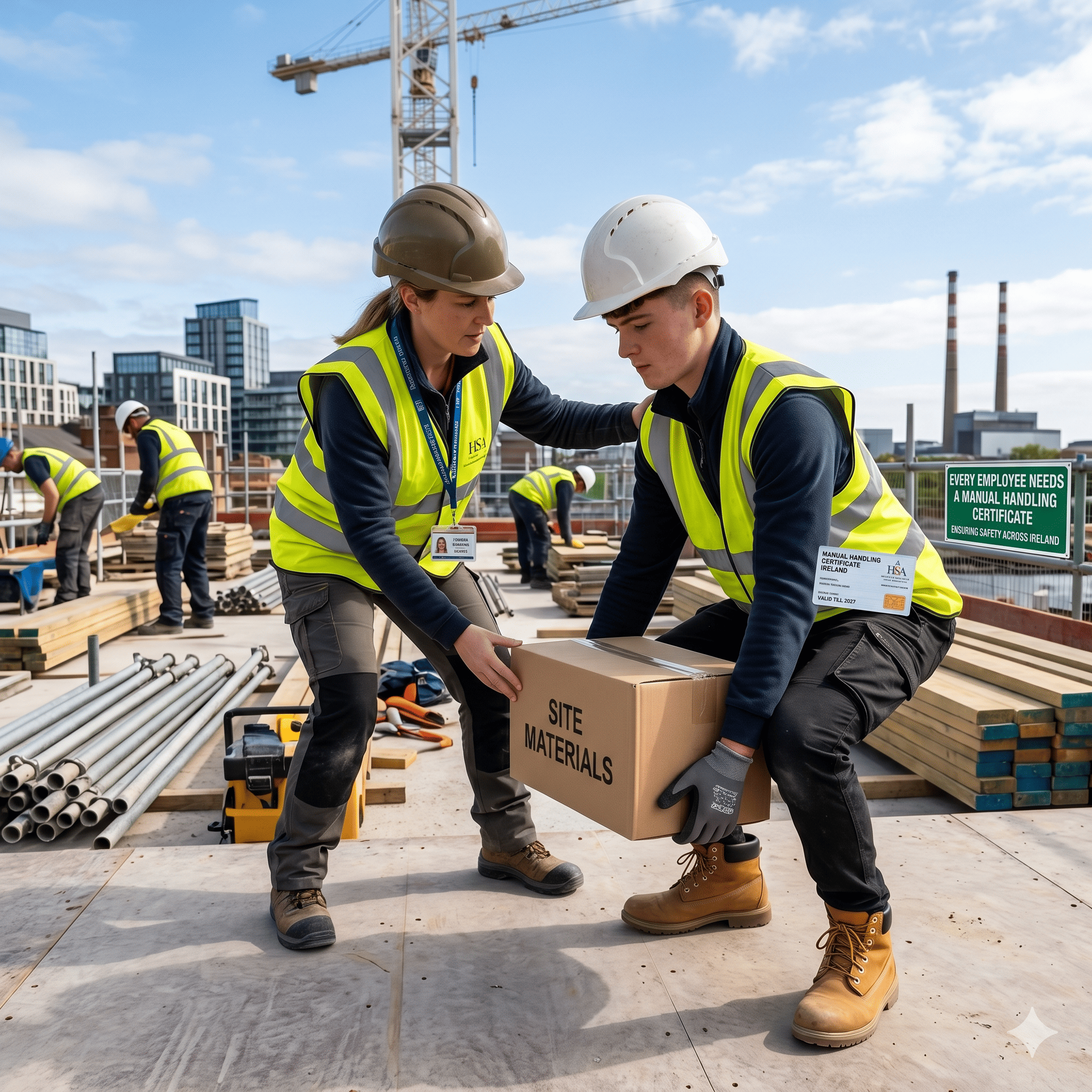
Workplace safety is a shared responsibility, but it begins with proper training. Across industries in Ireland, employees regularly perform tasks that involve lifting, carrying, pushing, or pulling objects. While these activities may seem routine, they can pose serious risks when performed incorrectly.
That’s why having a manual handling certificate Ireland is essential for every employee. It confirms that an individual has completed a recognized manual handling course Ireland and understands how to carry out tasks safely. Combined with effective manual handling Ireland practices, certification plays a crucial role in reducing injuries, improving efficiency, and ensuring compliance with workplace regulations.
In this article, we explore why every employee—regardless of industry—should complete manual handling training Ireland and obtain certification.
Manual Handling Is Part of Most Jobs
Many employees assume that manual handling only applies to physically demanding roles like construction or warehousing. In reality, manual handling Ireland applies to a wide range of jobs, including:
- Office work (moving equipment or files)
- Retail (handling stock)
- Healthcare (assisting patients)
- Hospitality (lifting supplies)
Because manual handling tasks are so common, proper training is essential for all employees, not just those in high-risk roles.
Reducing the Risk of Workplace Injuries
One of the main reasons every employee needs a manual handling certificate Ireland is to reduce the risk of injury.
Manual handling injuries are among the most frequent workplace issues and can include:
- Back pain
- Muscle strains
- Joint injuries
- Repetitive strain conditions
A manual handling course Ireland teaches employees how to use proper techniques, significantly lowering the likelihood of these injuries.
Promoting Safe Work Practices
Safety in the workplace depends on consistent behavior.
Employees who complete manual handling training Ireland learn best practices such as:
- Lifting with the legs, not the back
- Keeping loads close to the body
- Avoiding twisting movements
- Assessing risks before acting
A valid manual handling certificate Ireland ensures that these practices are understood and applied daily.
Supporting Legal Compliance
Employers in Ireland are required to ensure that employees are trained in safe manual handling practices where relevant.
By obtaining a manual handling certificate Ireland, employees help their employers meet legal obligations and maintain compliance with health and safety regulations.
For employees, certification also demonstrates an understanding of workplace responsibilities.
Building Confidence in Daily Tasks
Employees who are trained feel more confident when performing manual handling tasks.
A manual handling course Ireland provides clear guidance on how to approach tasks safely, reducing uncertainty and hesitation.
Confidence leads to:
- Better performance
- Fewer mistakes
- Reduced stress
This benefits both employees and employers.
Improving Workplace Efficiency
Proper manual handling techniques are not just about safety—they also improve efficiency.
Employees who complete manual handling training Ireland can move loads more effectively, reducing wasted effort and time.
This results in:
- Faster task completion
- Less physical strain
- Improved productivity
Efficiency is a key advantage of having a trained workforce.
Preventing Long-Term Health Problems
Incorrect manual handling practices can cause long-term health issues that develop over time.
These may include chronic back pain or joint problems that affect an employee’s ability to work.
By completing a manual handling course Ireland, employees learn how to protect their bodies and maintain their health throughout their careers.
Encouraging Personal Responsibility
A manual handling certificate Ireland encourages employees to take responsibility for their own safety.
Training helps workers understand that safety is not just the employer’s duty—it is a shared responsibility.
Employees are more likely to:
- Follow safety procedures
- Report hazards
- Support colleagues
This creates a safer work environment for everyone.
Enhancing Career Opportunities
Holding a manual handling certificate Ireland can improve employability.
Many employers require certification as part of their hiring process, particularly in roles that involve physical tasks.
For employees, certification:
- Demonstrates professionalism
- Shows commitment to safety
- Increases job opportunities
It is a valuable addition to any CV.
Supporting Teamwork and Communication
Manual handling tasks often involve teamwork, especially when handling large or heavy items.
A manual handling course Ireland teaches employees how to communicate effectively during team lifts and coordinate movements safely.
Good teamwork reduces the risk of accidents and improves workflow.
Reducing Workplace Absences
Injuries caused by poor manual handling can lead to time off work.
By applying the skills learned in manual handling Ireland training, employees can avoid injuries and reduce absenteeism.
This benefits both individuals and organizations.
Adapting to Different Work Environments
Employees may change roles or work in different environments throughout their careers.
A manual handling certificate Ireland provides transferable skills that can be applied across industries.
Whether working in healthcare, logistics, or retail, the principles of manual handling Ireland remain relevant.
Keeping Up with Workplace Standards
Workplace safety standards evolve over time.
Completing manual handling training Ireland ensures that employees stay up to date with best practices and current guidelines.
Regular refresher courses help maintain certification and reinforce knowledge.
Making Use of Flexible Learning Options
Employees can now complete training through a manual handling course online, making it easier to obtain certification.
Online courses offer:
- Flexible schedules
- Self-paced learning
- Quick certification
This accessibility ensures that all employees can complete training regardless of their work schedule.
Supporting a Positive Workplace Culture
When all employees hold a manual handling certificate Ireland, it contributes to a culture of safety and professionalism.
A workplace where everyone is trained is more likely to:
- Follow consistent practices
- Reduce risks
- Maintain high standards
This improves morale and overall performance.
Reducing Costs for Businesses
While this article focuses on employees, it’s important to note that trained workers also help businesses save money.
Fewer injuries mean:
- Lower medical costs
- Reduced insurance claims
- Less downtime
Employees who complete manual handling training Ireland contribute to these savings.
Long-Term Benefits for Employees
The benefits of having a manual handling certificate Ireland extend beyond the workplace.
Employees gain:
- Lifelong safety skills
- Better physical awareness
- Increased confidence in daily activities
These advantages make training valuable both professionally and personally.
Conclusion
A manual handling certificate Ireland is an essential qualification for every employee, regardless of industry or role. Through a structured manual handling course Ireland, workers gain the skills and knowledge needed to perform tasks safely, reduce risks, and improve efficiency.
By investing in manual handling training Ireland, employees not only protect themselves from injury but also contribute to a safer, more productive workplace.
Ultimately, manual handling Ireland certification is not just about compliance—it’s about building confidence, improving performance, and ensuring long-term health and safety for everyone.