



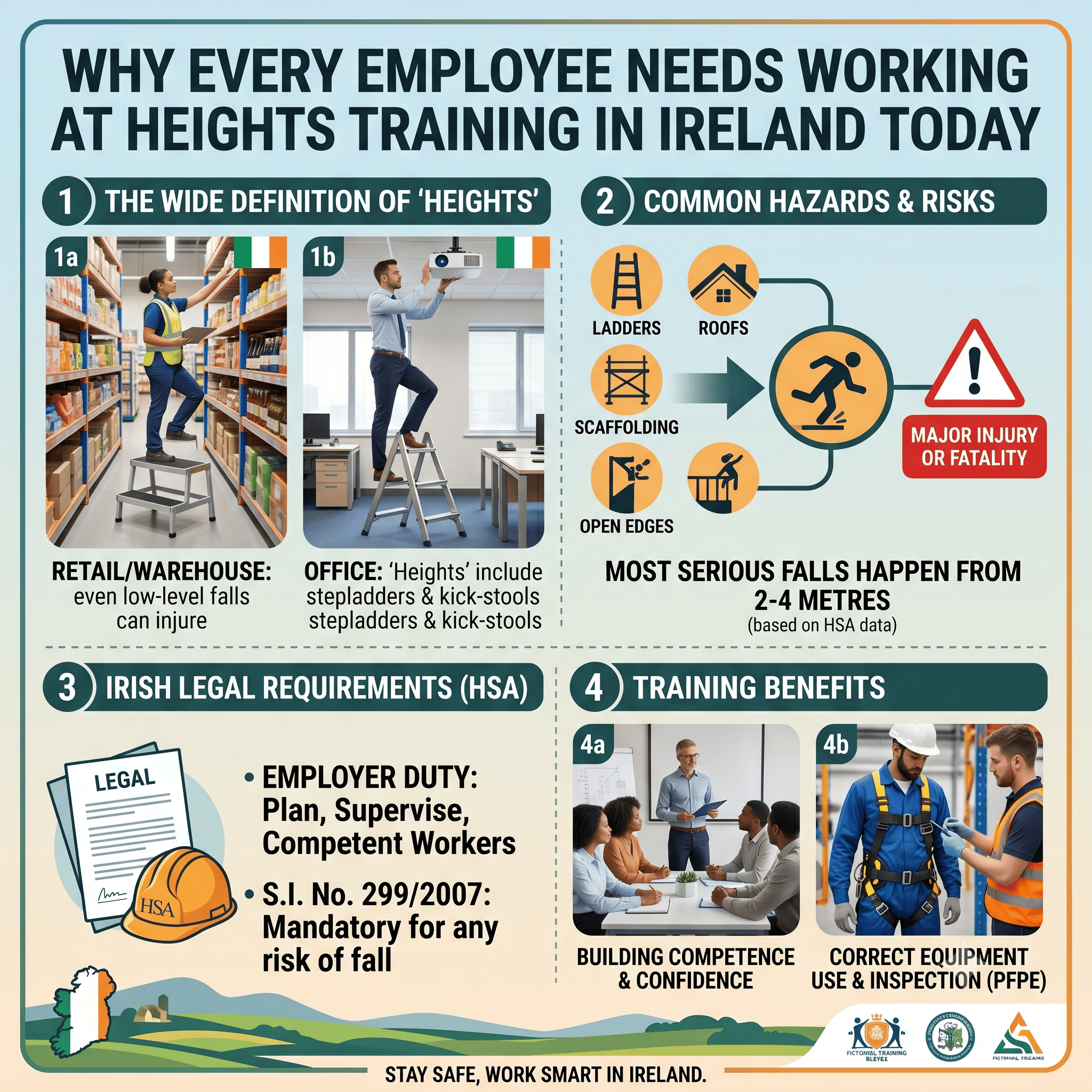
Working at Heights Training in Ireland is no longer something reserved only for specialist roles in construction or industrial climbing. Today, it is an essential part of workplace safety for a much wider range of employees across multiple industries. From warehouse operatives and maintenance staff to electricians, cleaners, installers, and facilities teams, many workers perform tasks that involve some level of elevation.
Because falls from height remain one of the leading causes of serious workplace injuries and fatalities, employers across Ireland are increasingly required to ensure that all relevant employees complete health and safety courses in Ireland, particularly focused on working at heights awareness and competence.
This article explains why every employee who may be exposed to height-related risks needs proper training, what the training includes, and how it improves safety standards in modern workplaces.
Understanding the Reality of Working at Height
Working at height does not only mean working on tall buildings or scaffolding. It includes any situation where a person could fall and suffer injury, such as:
- Using ladders in warehouses or offices
- Changing light fittings or ceiling fixtures
- Working on mezzanine floors
- Performing roof inspections or repairs
- Using mobile elevated work platforms (MEWPs)
- Installing signage or equipment at elevated positions
Even a fall from a relatively low height can cause serious injuries, long-term disability, or worse. This is why working at heights training in Ireland is considered essential across so many job roles.
Why This Training Is More Important Than Ever
Workplaces in Ireland are becoming faster-paced and more complex. Employees are often required to perform multiple tasks, sometimes outside their primary job description. This increases the likelihood of workers being exposed to height-related risks without fully realising it.
Several key factors make training more important today:
- Increased use of temporary and mobile equipment
- Higher safety expectations from regulators
- Greater awareness of workplace liability
- More diverse job roles involving maintenance tasks
- Stricter enforcement of safety regulations
As a result, health and safety courses online in Ireland are now widely used to ensure employees understand risks before they begin working at height.
Legal Responsibility in Ireland
Employers in Ireland have a legal duty under workplace safety legislation to protect employees from harm.
Safety, Health and Welfare at Work Act 2005
This law requires employers to:
- Provide a safe working environment
- Ensure workers are properly trained
- Assess and control workplace risks
- Maintain competent employees for hazardous tasks
General Application Regulations (Work at Height Regulations)
These regulations require employers to:
- Avoid working at height where possible
- Use suitable equipment and systems
- Provide appropriate training and supervision
- Carry out risk assessments
These laws make working at heights training in Ireland not just a recommendation, but a legal necessity in many roles.
Why Every Employee Should Be Trained
Even if an employee does not regularly work at height, they may still encounter situations where training becomes essential.
1. Unexpected Exposure to Height Risks
Many workplace accidents happen when employees perform tasks outside their usual responsibilities.
Examples include:
- Using a ladder to reach storage
- Climbing shelves or equipment
- Assisting with maintenance tasks
- Accessing elevated areas during emergencies
Without proper training, these situations can quickly become dangerous.
2. Increased Workplace Safety Awareness
Training helps employees develop a safety-first mindset. Workers learn to:
- Identify hazards before acting
- Stop and assess risks
- Use equipment safely
- Avoid unsafe shortcuts
This awareness reduces accidents across the entire workplace, not just during height-related tasks.
3. Preventing Common Workplace Accidents
Many accidents occur due to simple mistakes such as:
- Incorrect ladder use
- Poor balance or positioning
- Lack of PPE
- Ignoring weather conditions
- Rushing tasks
A working at heights certificate online helps eliminate these risks by teaching correct procedures.
4. Legal and Insurance Protection
Employers who fail to provide proper training risk:
- Legal penalties
- Increased insurance claims
- Workplace investigations
- Liability for injuries
Training demonstrates compliance with Irish safety regulations and reduces legal exposure.
5. Essential in Multiple Industries
Working at height is not limited to construction. It is common in:
- Warehousing and logistics
- Retail stockrooms
- Cleaning services
- Electrical and maintenance work
- Telecommunications
- Manufacturing facilities
This means a wide range of employees require working at heights training in Ireland.
What Employees Learn in Working at Heights Training
A high-quality health and safety course in Ireland includes essential skills and knowledge.
Hazard Identification
Employees learn to recognise risks such as:
- Unprotected edges
- Fragile surfaces
- Slippery floors
- Poor lighting
- Weather-related hazards
Risk Assessment
Training teaches workers how to:
- Evaluate work environments
- Identify potential dangers
- Apply safety controls
- Plan safe working methods
Safe Use of Equipment
Employees are trained in:
- Ladder safety and inspection
- Scaffolding awareness
- Mobile platform use
- Proper setup and stability checks
PPE and Fall Protection
Training includes correct use of:
- Safety harnesses
- Lanyards and anchor points
- Fall arrest systems
- Helmets and safety footwear
Emergency Procedures
Workers also learn:
- How to respond after a fall
- Emergency communication methods
- Rescue procedures
- Incident reporting
Benefits of Online Working at Heights Training
Many employers now use working at heights online training in Ireland because it is flexible and efficient.
Flexibility
Employees can complete training at their own pace.
Accessibility
Training is available from any device.
Fast Certification
Workers can receive a working at heights certificate online quickly after completion.
Cost Efficiency
Reduces travel and downtime costs.
Consistency
All employees receive the same safety information.
Improving Workplace Safety Culture
One of the biggest benefits of training is the improvement in overall safety culture.
When employees are trained, they:
- Take responsibility for safety
- Report hazards more effectively
- Follow procedures correctly
- Encourage safe behaviour among colleagues
This creates a safer and more productive work environment.
Common Misconceptions About Working at Heights
Many employees underestimate the need for training because they believe:
- “I only use a ladder occasionally”
- “It’s just a quick task”
- “I’ve done it before without issues”
These assumptions are dangerous. Accidents often happen during short, routine tasks—not planned high-risk work.
Choosing the Right Training Course
When selecting health and safety courses online in Ireland, employers should look for:
- Accredited certification
- Compliance with Irish legislation
- Comprehensive course content
- Employer recognition
- Strong provider reputation
A reliable course ensures training is both valid and practical.
Final Thoughts
Why Every Employee Needs Working at Heights Training in Ireland Today highlights a simple truth: height-related risks exist in far more workplaces than many people realise. Even basic tasks can become dangerous without proper knowledge and awareness.
By completing working at heights training in Ireland, employees gain essential skills that protect them in everyday work situations. Employers benefit from improved compliance, reduced accidents, and stronger safety culture.
Whether delivered through classroom learning or health and safety courses online in Ireland, this training is a critical investment in workplace safety.
Ultimately, working at heights training is not just for specialist roles—it is for everyone who may ever face a task above ground level. It saves lives, prevents injuries, and ensures that safety remains a top priority in every workplace.