



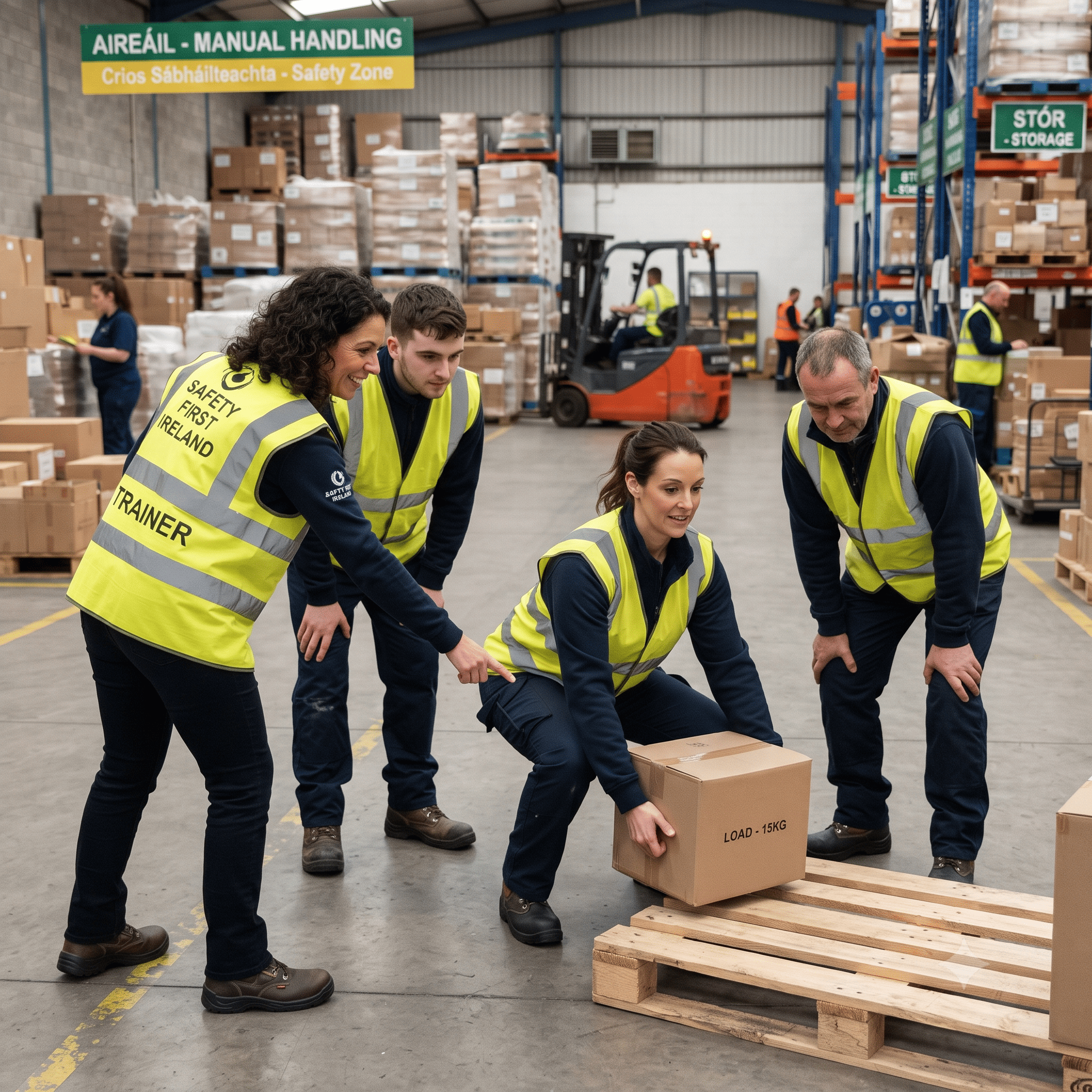
Workplace safety is one of the most important responsibilities of every employer. Regardless of the industry, protecting employees from avoidable injuries should always be a priority. In Ireland, manual handling is a routine part of work in sectors such as construction, healthcare, retail, warehousing, manufacturing, hospitality, logistics, and even office environments. While lifting, carrying, pushing, and pulling may seem like ordinary tasks, poor manual handling practices remain one of the leading causes of workplace injuries.
Back injuries, muscle strains, joint damage, and other musculoskeletal disorders can have lasting consequences for employees and significant financial implications for businesses. Fortunately, many of these injuries are preventable through proper education and practical instruction.
Investing in Manual Handling Training Ireland provides employees with the knowledge and confidence to carry out manual handling tasks safely. A professional Manual Handling Course Ireland not only reduces workplace risks but also supports legal compliance, improves productivity, and helps create a positive safety culture. Completing a recognised Manual Handling Certificate Ireland demonstrates that employees have received appropriate training and understand safe manual handling practices.
This article explains why every Irish employer should make manual handling training an essential part of their workplace safety strategy.
Manual Handling Is Part of Everyday Work
Many employers associate manual handling with physically demanding industries, but the reality is that manual handling occurs in almost every workplace.
Examples include:
- Lifting stock in retail stores
- Moving equipment in offices
- Carrying building materials on construction sites
- Handling deliveries in warehouses
- Repositioning patients in healthcare settings
- Moving furniture in hotels
- Transporting supplies in manufacturing facilities
Because these activities are so common, they are often underestimated. However, repetitive lifting or poor technique can quickly lead to injuries if employees have not received suitable training.
Reducing Workplace Injuries
One of the biggest reasons to invest in Manual Handling Training Ireland is injury prevention.
Incorrect manual handling techniques can cause:
- Back injuries
- Muscle strains
- Shoulder injuries
- Neck pain
- Knee problems
- Repetitive strain injuries
- Long-term musculoskeletal disorders
Many of these injuries develop gradually rather than from a single accident. Repeated poor lifting habits place continuous strain on muscles and joints, eventually leading to pain and reduced mobility.
A professional Manual Handling Course Ireland teaches employees how to lift, carry, push, and pull safely, significantly reducing these risks.
Lowering Absenteeism
Workplace injuries often result in employees taking time away from work for recovery.
Extended absences can lead to:
- Reduced productivity
- Increased workload for other employees
- Overtime costs
- Delayed projects
- Difficulty maintaining customer service
Preventing injuries through effective manual handling training helps businesses minimise disruption and maintain a reliable workforce.
Fewer injuries generally mean fewer sick days and better continuity across daily operations.
Improving Productivity
Employees who understand safe manual handling techniques often work more efficiently.
Training encourages workers to:
- Plan lifting tasks properly
- Use correct techniques
- Avoid unnecessary physical effort
- Work more confidently
- Handle materials more effectively
Rather than slowing work down, safe manual handling often improves workflow by reducing fatigue and avoiding preventable accidents.
Healthy employees are more productive, more focused, and better able to perform their duties consistently.
Supporting Legal Compliance
Irish employers have a legal duty to protect employees from workplace hazards under health and safety legislation.
This includes:
- Assessing manual handling risks
- Reducing unnecessary manual handling where possible
- Providing suitable equipment
- Delivering appropriate employee training
Providing Manual Handling Training Ireland demonstrates that an employer is taking reasonable steps to meet these responsibilities.
Training also provides documented evidence that employees have received suitable instruction, helping organisations prepare for inspections or internal audits.
Creating a Strong Safety Culture
Successful organisations understand that workplace safety depends on more than written policies.
A strong safety culture encourages employees to:
- Follow safe procedures
- Report hazards
- Help colleagues
- Avoid shortcuts
- Take responsibility for workplace safety
When employees receive regular manual handling training, they become more aware of risks and are more likely to make safe decisions during everyday tasks.
Over time, safety becomes part of the organisation's culture rather than simply a compliance requirement.
Teaching Correct Lifting Techniques
One of the core objectives of a Manual Handling Course Ireland is teaching proper lifting methods.
Employees learn how to:
- Stand with a stable base
- Bend at the knees
- Maintain a neutral spine
- Keep loads close to the body
- Lift smoothly
- Avoid twisting while carrying
These techniques reduce pressure on the back and significantly lower the risk of injury.
Improving Hazard Awareness
Many manual handling accidents occur because employees fail to recognise hazards before beginning a task.
Training teaches workers to identify risks such as:
- Wet floors
- Uneven surfaces
- Poor lighting
- Narrow walkways
- Unstable loads
- Obstructions
Recognising hazards before lifting allows employees to take simple preventative measures that improve overall workplace safety.
Encouraging Risk Assessment
A few seconds of planning can prevent many workplace injuries.
Employees learn to ask questions such as:
- Is the load too heavy?
- Can it be divided into smaller loads?
- Is assistance needed?
- Is lifting equipment available?
- Is the route clear?
This simple assessment becomes a valuable habit that reduces unnecessary risks.
Making Better Use of Mechanical Aids
Modern workplaces often provide equipment designed to reduce physical strain.
Examples include:
- Pallet trucks
- Trolleys
- Hoists
- Lift-assist devices
- Adjustable workstations
Employees who complete Manual Handling Ireland training understand when these aids should be used and how they contribute to safer working practices.
Using mechanical assistance not only reduces injuries but also improves efficiency.
Boosting Employee Confidence
Employees who understand safe manual handling feel more confident performing physical tasks.
Training helps them:
- Handle unfamiliar loads safely
- Know when to seek assistance
- Recognise workplace hazards
- Apply correct lifting techniques
- Protect themselves and colleagues
Confident employees are more likely to follow safe procedures rather than relying on guesswork.
Protecting Business Reputation
Workplace safety influences how customers, employees, and business partners view an organisation.
A strong commitment to health and safety demonstrates professionalism and responsibility.
Employers who invest in staff training often benefit from:
- Improved employee trust
- Better staff retention
- Enhanced reputation
- Increased customer confidence
- Stronger workplace morale
Safety investments contribute to long-term business success.
Suitable for Every Industry
Manual handling training benefits organisations of every size and across almost every sector.
Industries that regularly require training include:
- Healthcare
- Construction
- Warehousing
- Manufacturing
- Retail
- Hospitality
- Logistics
- Education
- Local authorities
- Office environments
Even employees who perform occasional lifting benefit from understanding safe manual handling principles.
Why Online Manual Handling Training Is a Smart Choice
Many Irish employers now choose online training because it offers greater flexibility while maintaining high training standards.
Benefits include:
- Employees can learn at their own pace.
- Training can be completed from any location.
- No travel is required.
- Minimal disruption to daily operations.
- Easy onboarding for new staff.
- Quick certification after successful completion.
Online learning makes it easier for businesses to ensure employees receive consistent and accessible training.
The Value of a Manual Handling Certificate Ireland
After completing training, employees receive a Manual Handling Certificate Ireland.
This certificate confirms that they understand:
- Safe manual handling principles
- Correct lifting techniques
- Risk assessment procedures
- Hazard awareness
- Safe working practices
Many employers require this certification before employees undertake roles involving regular manual handling.
It also provides reassurance that staff have received recognised training aligned with workplace safety standards.
Conclusion
Investing in Manual Handling Training Ireland is one of the most effective ways for Irish employers to protect their workforce, reduce workplace injuries, and improve overall business performance. Safe manual handling is not simply about lifting correctly—it involves planning tasks, recognising hazards, assessing risks, and developing safe working habits that become part of everyday operations.
A professional Manual Handling Course Ireland equips employees with the knowledge and practical skills needed to perform physical tasks confidently while reducing the likelihood of preventable injuries. In addition to supporting legal compliance, training helps lower absenteeism, improve productivity, strengthen workplace culture, and protect an organisation's reputation.
Providing employees with a recognised Manual Handling Certificate Ireland demonstrates a genuine commitment to health and safety. For businesses across Ireland, investing in manual handling training is not just a legal responsibility—it is a smart investment in the long-term wellbeing of employees and the continued success of the organisation.