



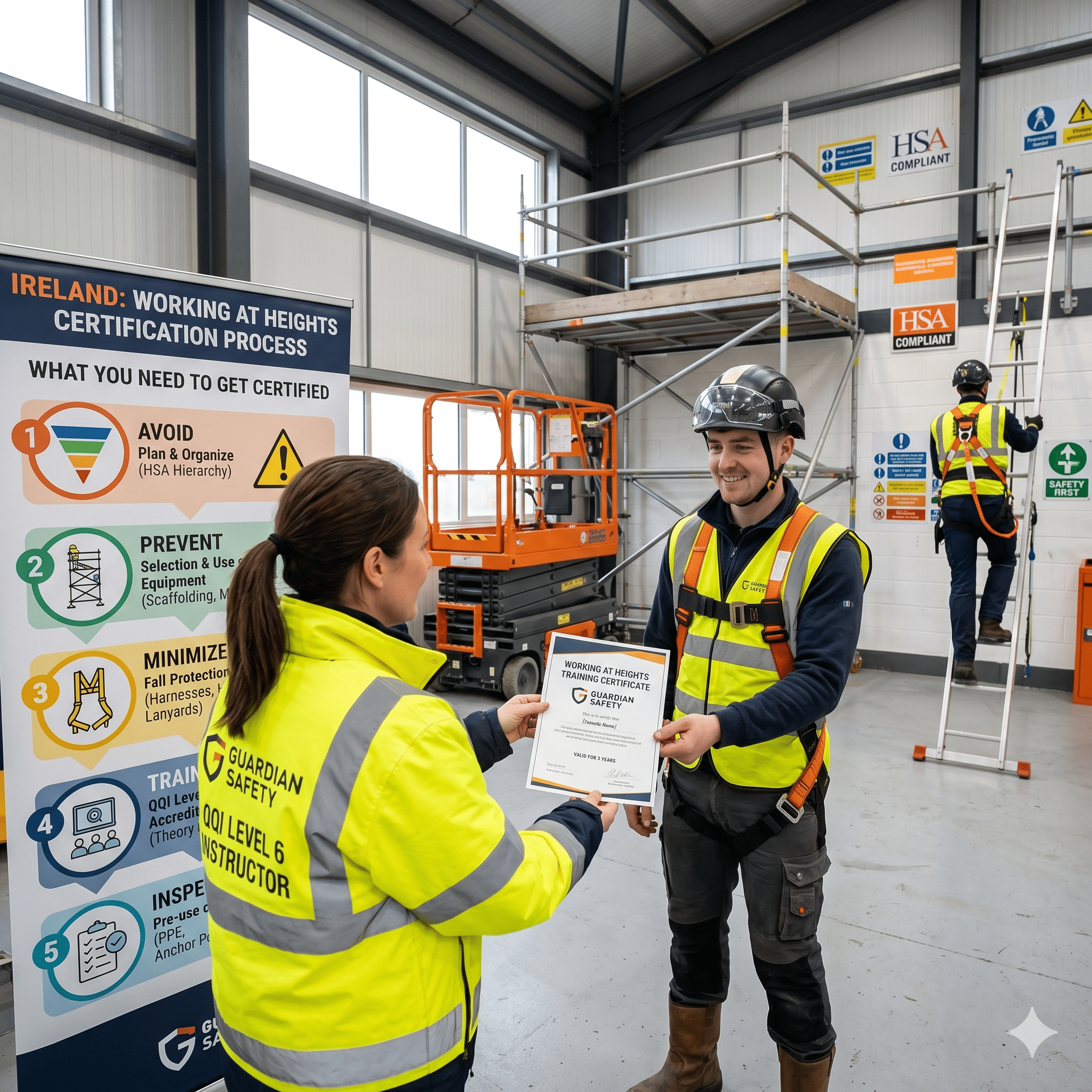
A Working at Heights Certificate in Ireland is an essential qualification for anyone whose job involves operating above ground level. Whether on construction sites, in warehouses, maintenance work, or industrial environments, working at height is considered one of the highest-risk activities in the workplace. Because of this, proper training and certification are not only recommended—they are often required by law and employers across Ireland.
This article explains everything you need to know about getting a working at heights certificate in Ireland, including what the training covers, who needs it, legal requirements, and how to get certified quickly and safely.
What Is a Working at Heights Certificate?
A Working at Heights Certificate is official proof that a worker has completed training in safe practices for tasks performed above ground level. It confirms that the individual understands:
- How to identify height-related hazards
- How to use safety equipment correctly
- How to follow safe systems of work
- How to prevent falls and accidents
This certificate is commonly required in industries such as construction, roofing, scaffolding, maintenance, telecoms, and utilities.
It demonstrates that the worker has been trained to follow safety procedures that reduce the risk of injury or fatal accidents.
Why Working at Heights Certification Is Important
Working at height is one of the leading causes of serious workplace injuries and fatalities. Even a fall from a relatively low height can result in severe consequences.
Certification is important because it:
1. Improves Workplace Safety
Training ensures workers understand risks and follow correct procedures to avoid accidents.
2. Reduces Legal Risk for Employers
Employers in Ireland must comply with Safety, Health and Welfare at Work legislation. Having certified workers helps demonstrate compliance.
3. Builds Worker Confidence
Trained employees are more confident when using ladders, scaffolding, or elevated platforms.
4. Prevents Common Accidents
Many incidents happen due to improper ladder use, lack of planning, or ignoring safety rules—all addressed in training.
Legal Requirements in Ireland
In Ireland, workplace safety is governed by the Safety, Health and Welfare at Work Act 2005 and the General Application Regulations (Work at Height Regulations).
These laws require employers to:
- Avoid working at height where possible
- Carry out risk assessments
- Provide proper training and supervision
- Supply safe equipment and PPE
- Ensure employees are competent to perform tasks
While the law does not always specify a single “certificate,” employers are legally required to ensure workers are trained and competent. A working at heights certificate in Ireland is widely accepted as proof of this competency.
Who Needs a Working at Heights Certificate?
This certification is required for many roles, including:
- Construction workers and site operatives
- Roofers and scaffolders
- Maintenance technicians
- Warehouse staff using mezzanine floors
- Window cleaners
- Telecom and utility engineers
- Industrial and facility workers
If your job involves ladders, scaffolding, rooftops, or elevated platforms, you will likely need this certification.
What You Learn in Working at Heights Training
A proper working at heights training course in Ireland includes both theoretical knowledge and practical safety skills.
Understanding Height Hazards
You will learn how to identify risks such as:
- Unprotected edges
- Fragile surfaces
- Slippery conditions
- Poor access routes
- Falling objects
Risk Assessment and Planning
Before starting any task at height, workers are trained to:
- Assess the working environment
- Identify potential dangers
- Choose appropriate equipment
- Plan safe access and exit routes
Ladder Safety
Ladders are one of the most common tools used at height—and one of the most dangerous when misused. Training includes:
- Correct ladder positioning
- Inspection before use
- Safe climbing techniques
- Avoiding overreach
- Maintaining three points of contact
Scaffolding and Elevated Platforms
Workers are trained on:
- Safe access to scaffolding
- Checking stability and guardrails
- Working on mobile elevated platforms (MEWPs)
- Fall prevention systems
Personal Protective Equipment (PPE)
Training covers proper use of:
- Safety harnesses
- Lanyards and anchor points
- Fall arrest systems
- Helmets and protective footwear
Emergency Procedures
In the event of an accident, workers must know how to respond:
- Rescue planning
- First aid basics
- Incident reporting
- Evacuation procedures
Online Working at Heights Certificate in Ireland
Many providers now offer working at heights online training in Ireland, making certification more accessible and flexible.
Benefits of Online Training
1. Flexible Learning
Workers can complete training at their own pace.
2. Cost-Effective
No travel or classroom expenses required.
3. Quick Certification
Many courses offer instant or same-day certification after completion.
4. Accessible Anywhere
Training can be completed from home, office, or job site.
However, some employers may still require practical assessments depending on the job risk level.
How to Get a Working at Heights Certificate
Getting certified is usually a straightforward process:
Step 1: Choose an Accredited Provider
Select a training provider that meets Irish safety standards and is recognized by employers.
Step 2: Complete the Training Course
This includes video lessons, reading materials, and safety assessments.
Step 3: Pass the Assessment
Most courses include a final quiz or test to confirm understanding.
Step 4: Receive Your Certificate
Once completed, you will receive your working at heights certificate, often digitally.
How Long Does the Certificate Last?
In most cases, a working at heights certificate is valid for 3 to 5 years, depending on the provider and employer requirements. After this period, refresher training is usually required to ensure knowledge remains up to date.
Employer Responsibilities
Employers in Ireland must ensure that:
- All workers are properly trained
- Risk assessments are carried out
- Equipment is regularly inspected
- Safe systems of work are implemented
- Employees are supervised when necessary
Providing or requiring a working at heights certificate is one of the simplest ways to meet these obligations.
Common Mistakes to Avoid
Even trained workers sometimes make mistakes that increase risk:
- Not inspecting ladders or equipment
- Ignoring weather conditions
- Using incorrect PPE
- Skipping safety checks due to time pressure
- Overreaching or poor positioning
Proper training helps eliminate these habits and reinforce safe practices.
Choosing the Right Training Course in Ireland
When selecting a working at heights training course, consider:
- Accreditation and certification validity
- Whether it meets Irish legal standards
- Online vs in-person options
- Employer recognition
- Course content quality
- Reviews and reputation
A good course should be practical, clear, and aligned with real workplace risks.
Final Thoughts
A Working at Heights Certificate in Ireland is more than just a qualification—it is a critical safety requirement that protects workers and ensures legal compliance. Whether completed online or in person, this training equips individuals with the skills and awareness needed to work safely in high-risk environments.
With proper training, workers can confidently use ladders, scaffolding, and elevated platforms while minimizing risk. For employers, ensuring staff are certified reduces accidents, improves productivity, and strengthens workplace safety culture.
Ultimately, working at heights certification is an essential investment in safety, compliance, and professional responsibility.