



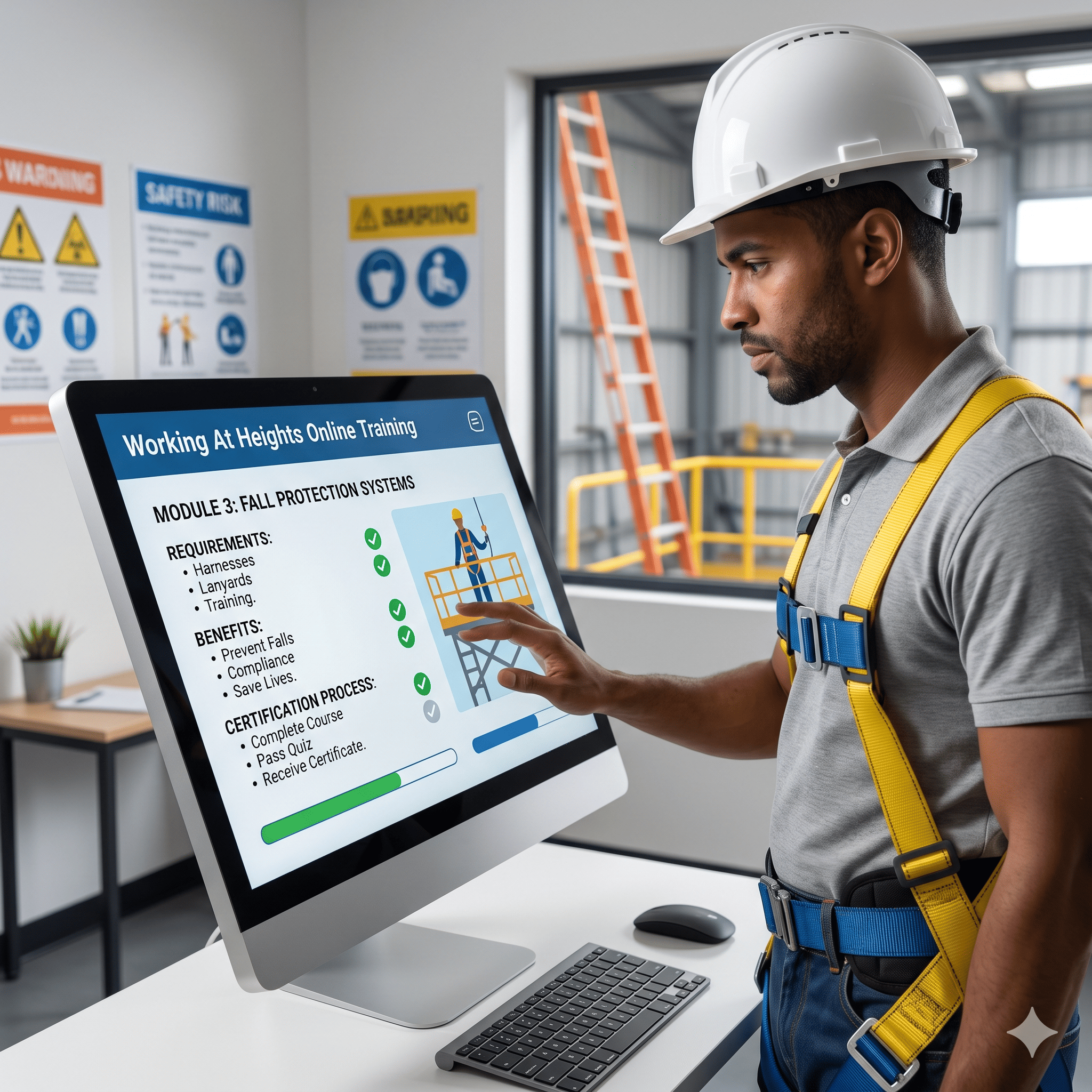
Working at Heights Online Training has become one of the most widely used forms of safety education in Ireland, especially in industries where employees regularly perform tasks above ground level. Construction, roofing, maintenance, warehousing, telecommunications, and facilities management all rely on workers who understand how to operate safely at height.
Because falls from height remain one of the leading causes of workplace injuries and fatalities, proper training is not optional—it is a legal and operational necessity. Online learning has made it easier for employers and workers to access high-quality health and safety courses in Ireland, complete training quickly, and receive recognised certification without disrupting work schedules.
This guide explains the requirements, benefits, and certification process for working at heights online training in Ireland, helping workers and employers understand what is involved and why it matters.
What Is Working at Heights Online Training?
Working at heights online training is a structured digital course that teaches workers how to carry out tasks safely when working above ground level. It covers hazard awareness, risk control, equipment use, and emergency procedures.
The training is designed to ensure that learners understand how to:
- Identify height-related hazards
- Prevent falls from ladders, scaffolding, or platforms
- Use personal protective equipment (PPE) correctly
- Follow safe systems of work
- Respond to emergencies
Upon completion, learners typically receive a working at heights certificate online, which serves as proof of competency.
Legal Requirements in Ireland
In Ireland, working at height is strictly regulated under workplace safety legislation.
Safety, Health and Welfare at Work Act 2005
This law requires employers to:
- Provide safe working conditions
- Ensure workers are properly trained
- Prevent workplace risks where possible
- Maintain competent staff for high-risk tasks
General Application Regulations (Work at Height Regulations)
These regulations require employers to:
- Avoid working at height where possible
- Use appropriate equipment
- Carry out risk assessments
- Provide adequate training and supervision
Construction Regulations 2013
In construction environments, employers must also:
- Ensure site safety coordination
- Appoint competent personnel
- Control high-risk activities
- Enforce safety procedures
These legal requirements make working at heights training in Ireland essential for compliance.
Requirements for Enrolling in Online Training
One of the advantages of health and safety courses online in Ireland is that they are generally accessible and straightforward to join.
Typical requirements include:
Basic Digital Access
Learners need:
- A smartphone, tablet, or computer
- Internet connection
- Basic digital literacy
Language Understanding
Most courses are delivered in English and require basic comprehension skills.
Workplace Relevance (Recommended)
While not always mandatory, the training is intended for individuals who:
- Work in construction
- Perform maintenance tasks
- Use ladders or scaffolding
- Operate at elevated heights
No Formal Qualifications Required
In most cases, no prior certification is needed to begin training.
What the Training Covers
A high-quality working at heights online training in Ireland program includes several key modules.
Hazard Identification
Workers learn to recognise dangers such as:
- Unprotected edges
- Fragile surfaces
- Slippery conditions
- Falling objects
- Weather-related risks
Understanding hazards is essential for preventing accidents.
Risk Assessment
Training teaches workers how to:
- Assess working environments
- Identify potential risks
- Evaluate risk severity
- Implement control measures
Proper planning is a key part of safety compliance.
Ladder Safety
Ladders are commonly used but highly dangerous when misused.
Training includes:
- Proper ladder setup
- Inspection before use
- Safe climbing techniques
- Maintaining three-point contact
- Avoiding overreach
Scaffolding and Platforms
Workers learn how to:
- Use scaffolding safely
- Identify unstable structures
- Use guardrails correctly
- Follow access procedures
Mobile Elevated Work Platforms (MEWPs)
Training covers:
- Safe operation procedures
- Emergency controls
- Harness requirements
- Load limitations
Personal Protective Equipment (PPE)
Workers are trained in using:
- Safety harnesses
- Lanyards and anchor points
- Fall arrest systems
- Helmets and safety footwear
Emergency Procedures
Training also includes:
- Rescue planning
- Incident reporting
- Emergency communication
- Evacuation procedures
Benefits of Working at Heights Online Training
Online training provides several advantages for both workers and employers.
Flexibility and Convenience
Workers can:
- Learn at their own pace
- Study from any location
- Pause and resume lessons
- Fit training around work schedules
This flexibility is especially useful in shift-based industries.
Faster Certification
Most learners can complete the course in a short time and receive a working at heights certificate online quickly after passing the assessment.
Cost-Effective Solution
Online training reduces costs by eliminating:
- Travel expenses
- Classroom fees
- Accommodation costs
- Lost work time
Accessible Anywhere
Training can be completed using:
- Laptops
- Tablets
- Mobile devices
This makes it ideal for remote workers and busy professionals.
Consistent Training Quality
Every learner receives the same information, ensuring standardised safety knowledge across teams.
Improved Safety Awareness
Workers gain practical knowledge that helps them:
- Recognise hazards early
- Follow safe procedures
- Reduce risk-taking behaviour
Certification Process
The certification process for working at heights online training in Ireland is simple and structured.
Step 1: Enrol in the Course
Learners register with a training provider offering health and safety courses online Ireland and gain access to course materials.
Step 2: Complete Learning Modules
Training is delivered through:
- Videos
- Reading materials
- Interactive lessons
Step 3: Take the Assessment
Most courses include:
- Multiple-choice questions
- Scenario-based questions
- Safety knowledge checks
Step 4: Receive Certification
After passing, learners receive a working at heights certificate online, usually:
- Instantly downloadable
- Sent by email
- Stored in an online account
The certificate includes:
- Learner details
- Course title
- Completion date
- Expiry date
Validity of Certification
Most certificates are valid for:
- 3 to 5 years
After this period, refresher training is required to maintain compliance.
Industries That Require This Training
Working at heights training is essential in many sectors:
- Construction
- Roofing
- Warehousing
- Telecommunications
- Facilities management
- Maintenance services
Any job involving elevated work requires proper certification.
Common Mistakes Online Training Helps Prevent
Training reduces risks such as:
- Using unsafe ladders
- Ignoring weather conditions
- Skipping equipment inspections
- Incorrect PPE use
- Rushing tasks
- Poor planning
Choosing the Right Provider
When selecting health and safety courses online in Ireland, consider:
- Accreditation and recognition
- Compliance with Irish law
- Course quality and depth
- Employer acceptance
- Provider reputation
A reliable provider ensures certification is valid and respected.
Final Thoughts
Working at Heights Online Training: Requirements, Benefits, and Certification Process highlights how modern digital learning has made safety training more accessible, efficient, and effective in Ireland. With clear legal requirements and high-risk working conditions, proper training is essential for protecting workers and ensuring compliance.
Online training provides a flexible and cost-effective way to gain essential safety knowledge while still meeting industry standards. From hazard identification and PPE use to risk assessment and emergency procedures, the course equips workers with the skills needed to operate safely at height.
Ultimately, completing working at heights training in Ireland is not just about obtaining a certificate—it is about improving safety, preventing accidents, and ensuring every worker returns home safely at the end of the day.