



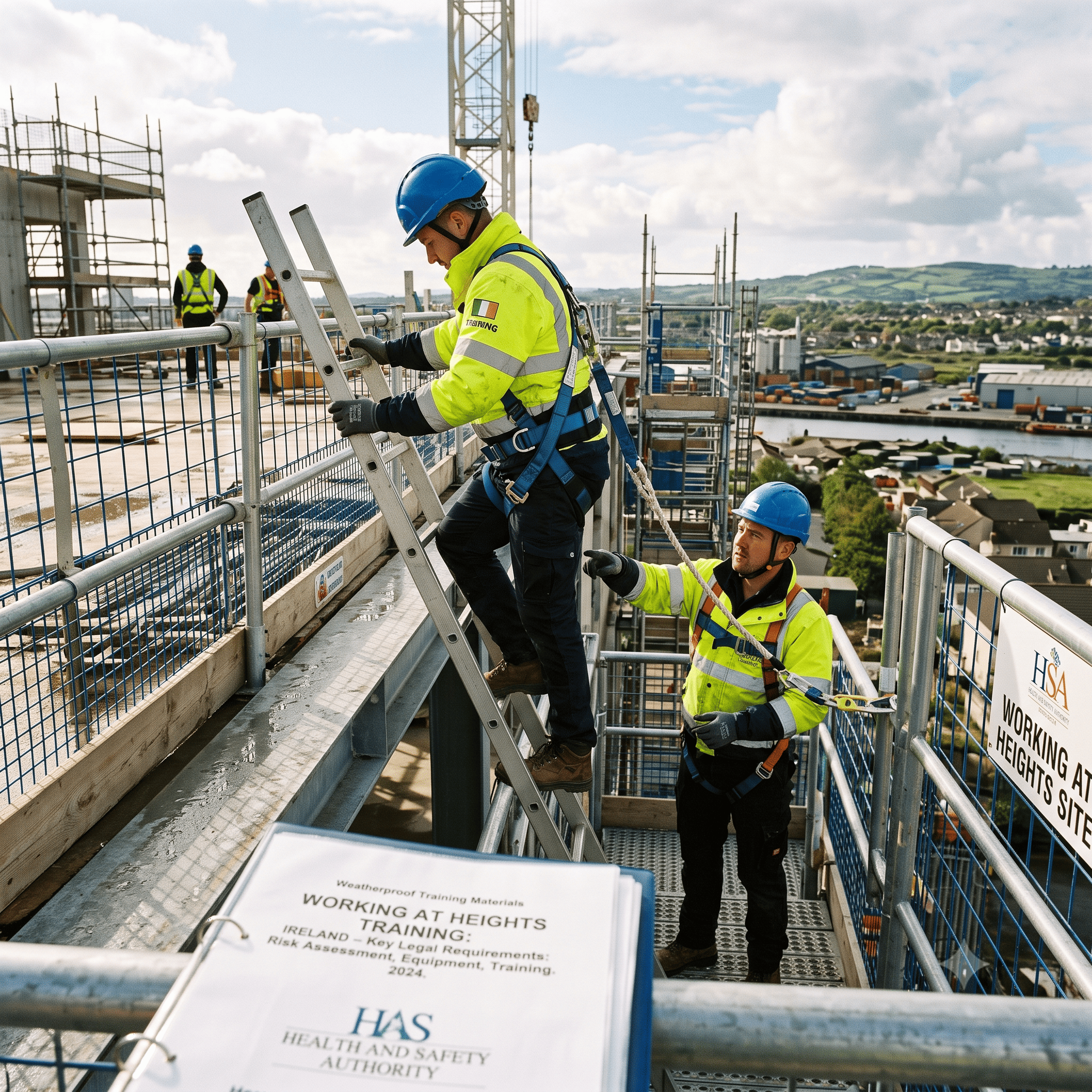
Working at Heights Training Ireland is a vital part of workplace safety and legal compliance for employers whose staff carry out tasks above ground level. Whether your business operates in construction, roofing, warehousing, facilities management, telecommunications, manufacturing, or maintenance, protecting employees from fall hazards is both a legal obligation and a moral responsibility.
Falls from height remain one of the leading causes of serious workplace injuries and fatalities. Many of these incidents can be prevented through proper planning, suitable equipment, effective supervision, and comprehensive training. This is why health and safety courses in Ireland place significant emphasis on working at heights awareness and competence.
This guide explains the legal requirements every employer should understand, why training is essential, and how providing working at heights training in Ireland helps create safer workplaces while supporting compliance with Irish legislation.
Why Working at Heights Training Is So Important
Working at height involves any activity where a person could fall and suffer an injury. Contrary to popular belief, it does not only apply to workers on tall buildings or scaffolding. Employees may be working at height when they:
- Use ladders to access shelving
- Carry out roof inspections
- Work on scaffolding
- Operate mobile elevated work platforms (MEWPs)
- Perform maintenance on elevated equipment
- Install lighting, signage, or electrical systems
- Access mezzanine floors
Even relatively low-level falls can cause fractures, head injuries, spinal damage, or other serious consequences. Proper training helps workers understand these risks and perform their duties safely.
Employer Responsibilities Under Irish Law
Irish employers have a legal duty to protect employees and anyone else who may be affected by workplace activities.
The primary legislation governing workplace safety is the Safety, Health and Welfare at Work Act 2005.
Under this legislation, employers must:
- Provide a safe place of work
- Maintain safe systems of work
- Identify workplace hazards
- Assess risks
- Provide suitable instruction, information, and training
- Ensure employees are competent for the work they perform
Providing working at heights training in Ireland is one of the most effective ways to meet these responsibilities where height-related risks exist.
Work at Height Regulations
In addition to general workplace safety legislation, employers must comply with regulations covering work at height.
These regulations require employers to:
- Avoid working at height where reasonably possible
- Prevent falls whenever possible
- Reduce the consequences of a fall if prevention is not possible
- Select suitable work equipment
- Ensure workers receive appropriate training
- Properly supervise high-risk activities
These legal principles form the foundation of safe working at height throughout Ireland.
When Is Working at Heights Training Required?
Training is necessary whenever employees perform tasks where there is a risk of falling and suffering injury.
Examples include:
- Construction projects
- Roofing work
- Window installation
- External building maintenance
- Warehouse stock retrieval
- Telecommunications work
- Electrical installations
- Industrial maintenance
- Solar panel installation
- Sign installation
Even occasional work at height should be supported by appropriate safety training.
Why Employers Cannot Ignore Training
Some employers mistakenly assume experienced workers do not require additional training.
However, experience alone does not replace structured safety education.
Proper health and safety courses online in Ireland help workers:
- Understand current safety standards
- Follow safe working procedures
- Recognise changing workplace hazards
- Use modern safety equipment correctly
- Refresh knowledge regularly
Training should be viewed as an ongoing process rather than a one-time requirement.
What Working at Heights Training Covers
A professional working at heights training course in Ireland provides workers with practical knowledge that can be applied immediately on the job.
Hazard Identification
Workers learn to recognise common hazards such as:
- Open edges
- Fragile roof surfaces
- Slippery platforms
- Poor weather conditions
- Falling materials
- Unsafe access routes
Recognising hazards early significantly reduces accident risks.
Risk Assessment
Employees are trained to:
- Assess workplace conditions
- Identify hazards
- Evaluate levels of risk
- Implement suitable control measures
- Plan work safely before beginning
Effective planning is one of the most important methods of accident prevention.
Safe Use of Ladders
Training covers:
- Ladder selection
- Safe setup
- Equipment inspection
- Correct climbing techniques
- Maintaining three points of contact
- Preventing overreaching
Many workplace falls involve incorrect ladder use, making this an essential topic.
Scaffolding Awareness
Workers learn:
- Safe access procedures
- Platform inspections
- Guardrail systems
- Recognising unsafe scaffolding
- Reporting defects immediately
Mobile Elevated Work Platforms (MEWPs)
Where applicable, workers receive instruction on:
- Safe operation
- Equipment limitations
- Stability considerations
- Emergency lowering procedures
- Harness requirements
Personal Protective Equipment (PPE)
Training includes correct use of:
- Safety harnesses
- Lanyards
- Anchor points
- Fall arrest systems
- Helmets
- Protective footwear
Workers also learn how to inspect PPE before every use.
Emergency Procedures
Employees are taught how to respond if an incident occurs.
Topics include:
- Emergency communication
- Rescue planning
- Incident reporting
- Safe evacuation procedures
Prepared workers are better equipped to respond calmly and effectively during emergencies.
Benefits of Providing Working at Heights Training
Employers gain significant advantages by investing in proper training.
Improved Workplace Safety
Trained employees are better able to recognise hazards and avoid unsafe behaviour.
Legal Compliance
Providing recognised health and safety courses in Ireland helps demonstrate compliance with workplace safety legislation.
Reduced Workplace Accidents
Workers who understand safe procedures are less likely to experience falls and related injuries.
Lower Financial Costs
Reducing accidents may help minimise:
- Lost productivity
- Investigation costs
- Insurance claims
- Equipment damage
- Project delays
Increased Employee Confidence
Workers who understand correct procedures often perform tasks with greater confidence and consistency.
Stronger Safety Culture
Training encourages workers to:
- Report hazards
- Follow procedures
- Support colleagues
- Take responsibility for workplace safety
A positive safety culture benefits everyone.
Online Working at Heights Training
Many organisations now choose working at heights online training in Ireland because it offers flexibility while maintaining high learning standards.
Online courses allow workers to:
- Learn at their own pace
- Complete training remotely
- Access materials from multiple devices
- Receive digital certification
For employers, online learning reduces disruption while making workforce training easier to manage.
Choosing the Right Training Provider
When selecting health and safety courses online in Ireland, employers should consider:
- Industry recognition
- Relevant course content
- Compliance with Irish legislation
- Easy access for learners
- Certificate availability
- Provider reputation
Choosing a reputable provider helps ensure employees receive accurate, practical, and up-to-date safety information.
Maintaining Ongoing Compliance
Providing initial training is only part of an employer's responsibility.
Businesses should also:
- Review workplace risk assessments regularly
- Inspect equipment routinely
- Monitor safe working practices
- Provide refresher training when appropriate
- Update safety procedures as work changes
Continuous improvement helps maintain a safe working environment.
Final Thoughts
Working at Heights Training Ireland: Legal Requirements Every Employer Must Know highlights why working at heights training is a fundamental part of workplace safety management. Irish employers have clear legal responsibilities to identify risks, provide suitable training, and ensure employees are competent to perform elevated tasks safely.
By investing in working at heights training in Ireland, employers not only meet their legal obligations but also reduce accidents, improve productivity, and create a stronger safety culture. Employees benefit from greater confidence, better hazard awareness, and the knowledge required to work safely in high-risk environments.
Whether delivered in person or through health and safety courses online in Ireland, working at heights training is an investment that protects people, supports compliance, and contributes to safer workplaces throughout Ireland.